
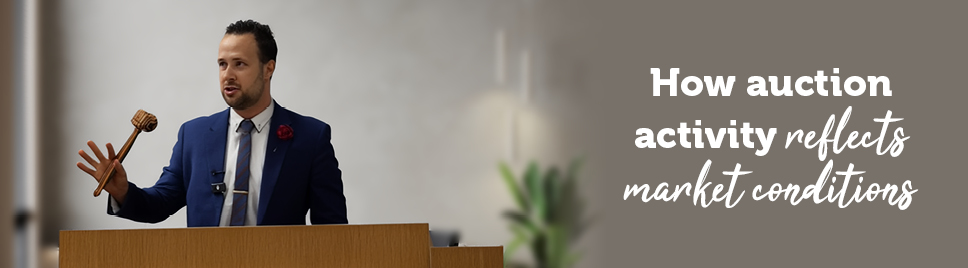
As the property market moves through winter, it's common to see fewer homes coming to market. While seasonal conditions often result in lower listing numbers, buyer demand doesn't necessarily slow at the same pace. In fact, many active buyers continue searching, waiting for the right property to become available.
This imbalance between supply and demand can create valuable opportunities for sellers, particularly when their property is supported by a well-planned auction campaign.
Auctions reflect buyer confidence
Auction activity is often a useful indicator of what's happening in the market. When buyers are engaged, attending open homes and actively competing for quality properties, it demonstrates confidence and genuine intent to purchase.
Even in quieter markets, auctions remain an effective way to identify serious buyers. Rather than waiting for offers to arrive, an auction campaign creates a clear timeframe that encourages buyers to make decisions and engage early.
With fewer properties available over winter, buyers often have fewer options to choose from, meaning well-presented homes can attract strong attention.
An auction is much more than auction day
Many people think of an auction as a single event, but we see it differently.
An auction is a structured three-phase sales process designed to maximise buyer engagement, uncover every opportunity in the market and give sellers the best possible chance of achieving a successful result.
Phase One: Finding every buyer
The first stage begins the moment your property launches to the market.
Our goal is to ensure every potential buyer knows your property is available. Through targeted marketing, open homes and buyer follow-up, we identify interested purchasers and work closely with them throughout the campaign.
Buyers who are in a position to purchase with cash and unconditional finance can actually secure the property before auction day if the opportunity arises (in the form of a ‘Pre-auction offer’. For sellers, this means a successful outcome can be achieved at any point during the campaign—not just under the hammer.
Phase Two: Creating fair competition
Auction day is where motivated, unconditional buyers have the opportunity to compete for your property in real time.
Unlike private negotiations, every bid is made openly and transparently. Buyers can clearly see where they stand, and sellers can have confidence that the property's value is being determined by genuine market competition.
This transparent process removes much of the uncertainty that can come with multiple-offer situations and ensures everyone competes on equal terms.
Phase Three: Leveraging every opportunity
If your property doesn't sell at auction, the campaign doesn't end there.
By this stage, we've already identified who has genuine interest in your property. That includes buyers who may have loved the home but were unable to bid because they needed finance approval, had a property to sell, or were purchasing subject to other conditions.
Armed with valuable feedback gathered throughout the campaign, we can move into post-auction negotiations with a clear understanding of buyer interest, pricing expectations and market sentiment.
This allows sellers to make informed decisions while opening the door to conditional buyers who couldn't participate on auction day.
Why this matters in today's market
With fewer homes available over winter, buyers are actively looking for new listings. An auction campaign ensures your property receives maximum exposure from day one and creates multiple opportunities to achieve a successful sale.
Rather than relying on a single event, the auction process works to:
- Generate strong buyer awareness.
- Create urgency and encourage early engagement.
- Provide a transparent platform for unconditional buyers to compete.
- Build a database of interested purchasers for post-auction negotiations if required.
- Give sellers valuable market feedback throughout the campaign.
Confidence through information
One of the greatest advantages of an auction campaign is the information it provides.
Throughout the process, sellers gain real-time insights into buyer activity, levels of interest, pricing expectations and market demand. This information is invaluable, whether your property sells before auction, under the hammer or through post-auction negotiations.
Rather than guessing where the market sits, you'll have genuine buyer feedback to help guide your decisions.
Every campaign is designed to maximise opportunity
No two properties—or markets—are exactly the same. That's why choosing the right sales strategy is about more than selecting a method of sale.
A well-executed auction campaign is designed to expose your property to the widest possible audience, engage motivated buyers at every stage and provide multiple opportunities to secure a successful result.
Whether your home sells before auction day, under the hammer or shortly afterwards, the goal remains the same: to create competition, uncover every genuine buyer and give you the confidence to make informed decisions throughout the selling journey. Find out more at https://www.eves.co.nz/auctions.
 My EVES property